
The aim is to improve the treatment of resectable HCC with a high risk of recurrence, using a perioperative therapeutic strategy based on immunotherapy, in parallel with the development of research into biomarkers predicting response and resistance and preclinical models directed at new therapies.

This space is for healthcare professionals and non-collaborating centers who wish to learn more about ASPIRE-AECC, understand the clinical and scientific value of the project, enquire about potential candidates, refer patients and request more information about the study.
What is ASPIRE-AECC?
ASPIRE-AECC is a national hepatocellular carcinoma (HCC) research project that combines a multicenter clinical trial with complementary lines of translational research.

The project is funded by the the Scientific Foundation of the Spanish Association Against Cancer (AECC) within the framework of the "AECC 70% Survival Challenge" program.
ASPIRE-AECC has an expected duration of six years.
Why is this project significant?
HCC is the tumor with the third highest mortality worldwide, and it continues to pose a clinical challenge due to its high risk of recurrence, even in patients treated with curative intent (30-40% of cases) and its high incidence (~6,500 diagnosed cases in Spain).
The project is not only a clinical trial, but also incorporates a translational component aimed at a better understanding of the biology of the disease and response and resistance mechanisms.
The clinical trial
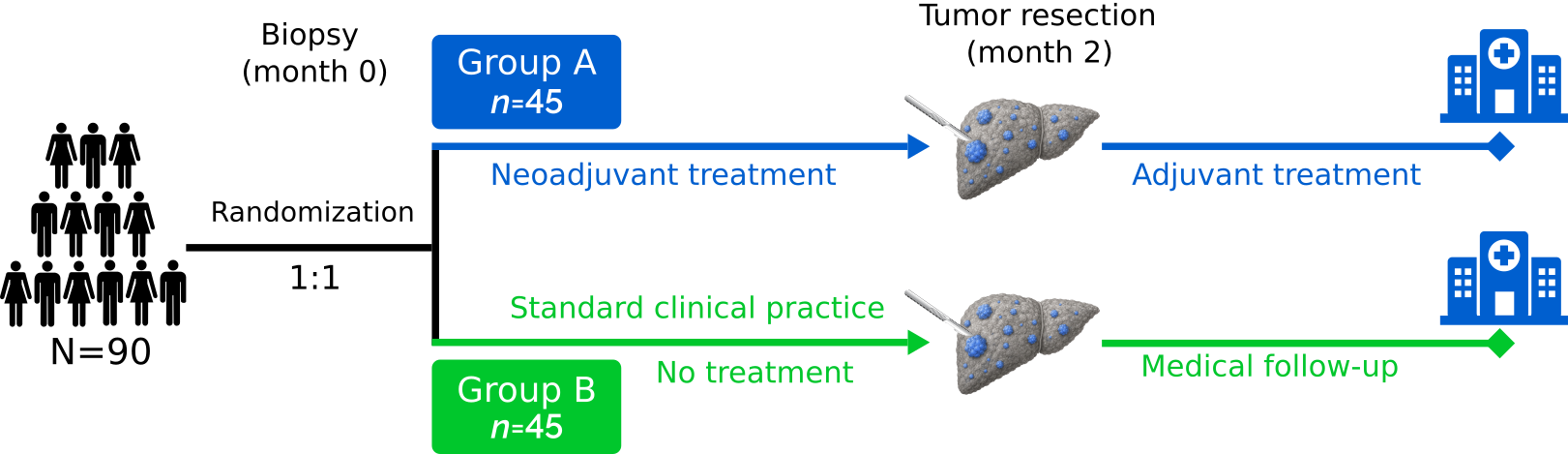
ASPIRE-AECC is a national phase II open-label randomized controlled multicenter study , designed to evaluate the efficacy and safety of atezolizumab and bevacizumab as neoadjuvant and adjuvant treatments in patients with resectable hepatocellular carcinoma and high risk of recurrence.
Patients are assigned 1:1 and the comparator is standard clinical follow-up/practice. The study plans to include 90 participants, distributed in two arms of 45 patients each..


The primary efficacy objective is to evaluate recurrence-free survival (RFS), defined as the period between randomization and first documented recurrence or death from any cause, assessed within a follow-up period of 2-5 years.

Secondary objectives:
- Overall survival
- Major pathological response
- Complete pathological response
- Radiological response
- R0 resection rate
- Safety and tolerability
- Surgical feasibility

General treatment plan
In the experimental arm, participants receive up to three doses of atezolizumab and two doses of bevacizumab before surgery, followed by adjuvant treatment for up to 12 months or 17 cycles, provided there is no recurrence or unacceptable toxicity.
Patient profile

Inclusion and exclusion criteria:
- Adults with a histologic diagnosis of BCLC stage A hepatocellular carcinoma (HCC) and candidates for R0 resection.
- Non-cirrhotic or cirrhotic patients with Child-Pugh Class A liver function, no clinically significant portal hypertension (CSPH) or in case of CSPH, candidates for minor resection only (<3 segments).
- High risk of recurrence: defined by the presence of multifocal disease, large tumor diameter (>5 cm), AFP ≥400 ng/mL, poor tumor differentiation, or presence of microvascular invasion*.
*For patients with tumors measuring 3–5 cm, a predefined nomogram will be used in which a score >200 points indicates a high probability of microvascular invasion.
The information in this section is for guidance only.
The final decision as to whether a person can participate in the study is always the responsibility of the medical and research team, following an individual assessment and confirmation of compliance with all the criteria set out in the protocol.
Patient referral

If you believe that a patient could be a potential candidate for ASPIRE-AECC, you can contact the project team using the form available on this website.
To facilitate an initial assessment, please provide basic clinical information about the case, the referring center, the specialty of the referring professional, and contact details.
The final eligibility of the patient will always be determined by the study research team.
Participating centers / study network
ASPIRE-AECC is a multidisciplinary network of 42 clinical, translational and basic researchers, based in 26 centers from 14 provinces throughout Spain.

Its multicenter structure facilitates the identification, evaluation and possible referral of candidates from non-collaborating hospitals and enhances the coordinated and collaborative nature of the project
Participating centers
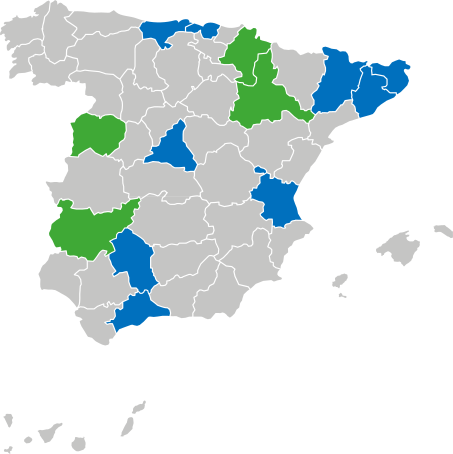
Clinical (C): 15
Basic-Translational (B): 11
Total centers: 26
Project research objectives
ASPIRE-AECC not only evaluates a perioperative immunotherapy strategy in patients with resectable hepatocellular carcinoma, but also includes a translational research component focused on:

- Developing genetic studies to identify predictive biomarkers of recurrence in these patients and developing predictive tools for treatment response to neoadjuvant therapy alone or combined with the vaccine.
- Developing experimental models to explore mechanisms of resistance to treatment and identify new therapeutic options.
Informational materials and scientific activity
Downloadable resources
Contact
For more information about ASPIRE-AECC, you can contact us using the contact form or the contact details provided.